
Ko te DNS, te Pūnaha Ingoa Rohe rānei, he pūnaha e hono ana i ngā ingoa rohe e ngāwari ana ki te whakamahi me ō rātou wāhitau IP, wāhitau Ipurangi rānei e taea te pānui e te mīhini. Ko tētahi huarahi ngāwari ki te whakaaro mō te mahi a te DNS he rite ki te rārangi hoapā o tō waea atamai, e whakataurite ana i ngā ingoa ki ō rātou tau waea me ngā wāhitau īmēra. Ina whakaurua e te tangata te ingoa rohe ki tā rātou pūrere, ka rapu te DNS i te wāhitau IP e pā ana, ka hono atu ki te tūmau DNS motuhake e rongoa ana hei tiro i te paetukutuku.
How Does DNS Work?
The internet is an enormous network of computers, with each device connected to it given a unique IP address to help other computers find and identify it. The IP address is a group of numbers and full stops which look like this: 195.245.651.145. Because an IP address incredibly difficult to remember and type accurately, a domain name is used instead.
Ko nga mea katoa e mahia ana e te Pūnaha Ingoa Rohe, te DNS ranei, ko te whakamaori i aua ingoa rohe ki roto i nga wahitau IP, ka tohu i to taputapu ki te wahi e tika ana kia haere. Ko te wahitau IP me te ingoa rohe ka kiia he rekoata DNS.
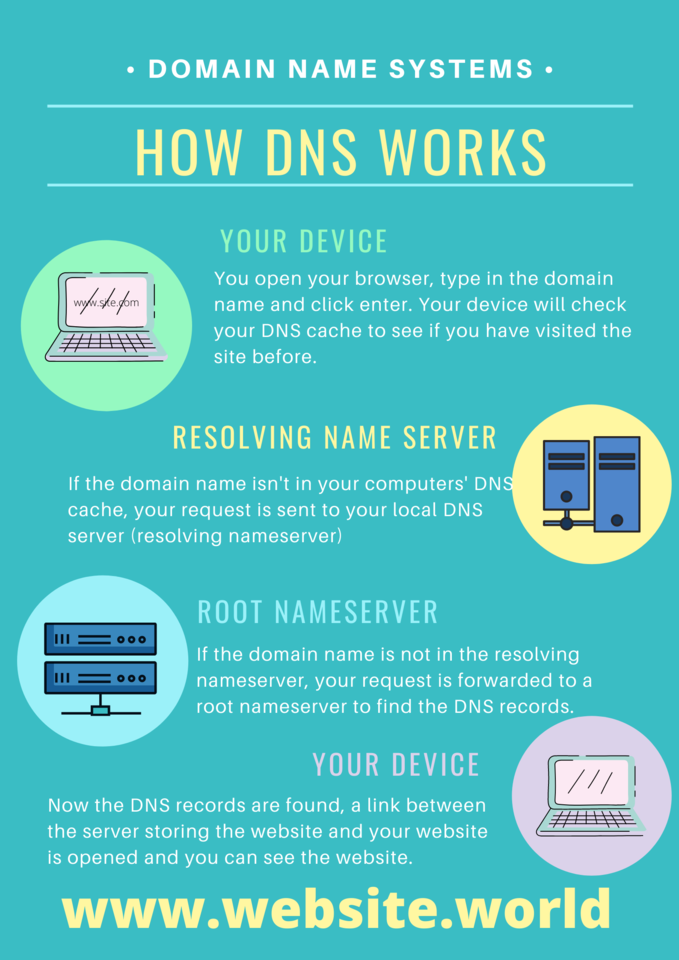
Take a look at this four step diagram to see how this works in greater detail:
Nameservers and DNS Records
Nameservers are special servers which keep the DNS records of specific domain names. Nameservers are managed by the domain name registrar or the website hosting provider, which we are both.
Kei te tumau ingoa tona ake wahi noho, ka taea te penapena i nga rekoata DNS me nga ingoa rohe kia rua neke atu ranei nga ingoa ingoa (kotahi te tuumau tuatahi, ko tetahi he taapiri). Ko te mea pai rawa atu ki te whakahaere i to paetukutuku manaaki me to ingoa rohe e te ingoa ingoa kotahi, na reira ka tūtohu matou kia manaakihia e o maatau kaihoko ki a maatau.
Hokona to ingoa rohe me te hanga i to paetukutuku me matou i tenei ra Tīmatahia te Whakamātautau Koreutu
Posted: Friday 22 January 2021
